The cost of pollution: How construction sites can avoid heavy fines and bad press

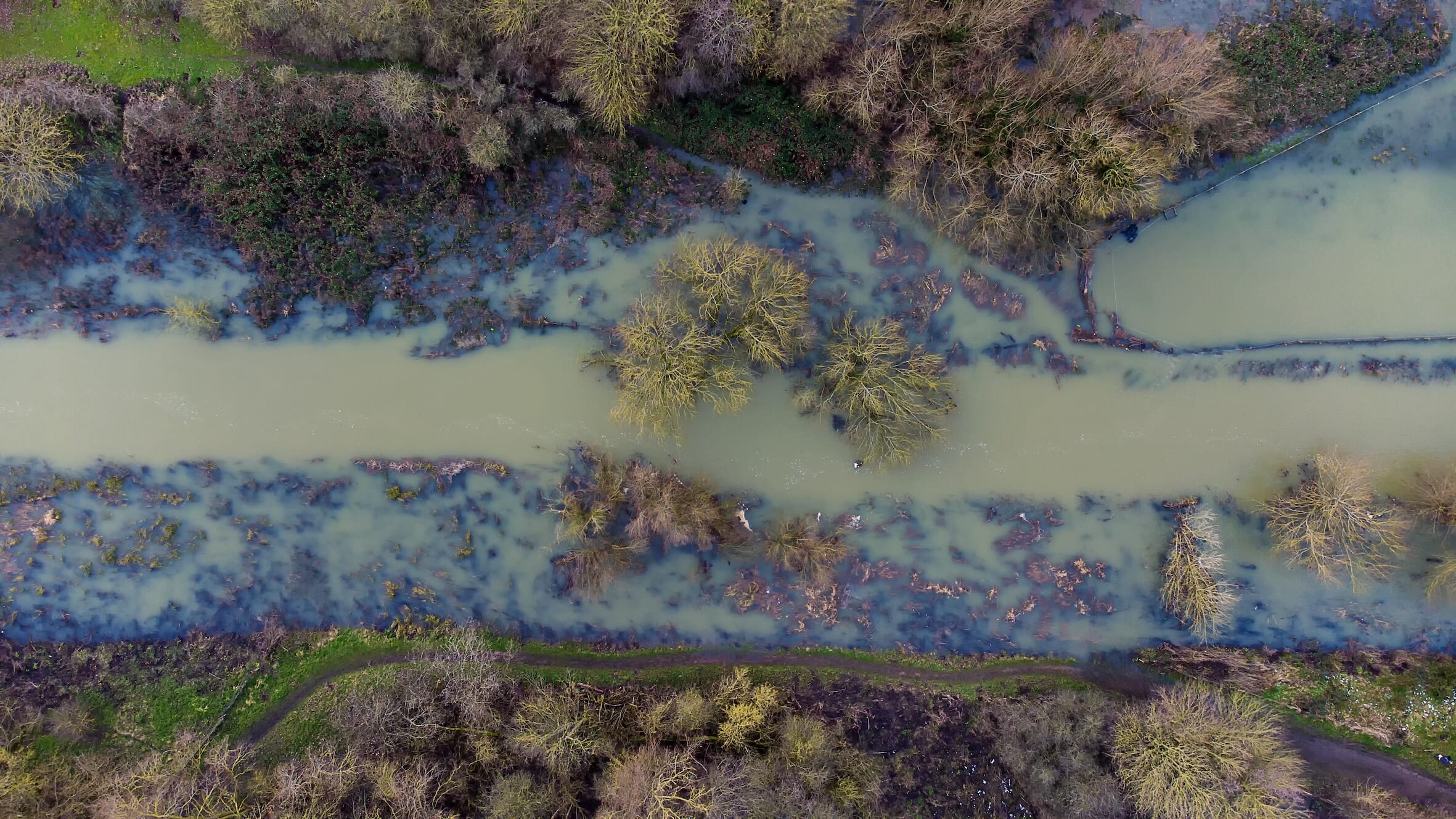
Over the past few years, pollution fines have dominated UK headlines. While much of the media attention focuses on water companies, construction sites are also firmly in the spotlight, especially where silt pollution or unauthorised water discharge affect local watercourses.
For contractors, the risk isn’t only environmental. It’s financial, reputational, and operational too.
In this article, we explore how construction sites can avoid costly pollution fines through better planning, permitting and silt-control measures.
Why pollution fines remain a major risk for construction sites
When the cap on civil penalties was removed in 2023, regulators gained the power to issue unlimited fines, depending on the severity of the incident. Environment Secretary at the time, Steve Barclay, said:
“By lifting the cap on these sanctions, we are simultaneously toughening our enforcement tools and expanding where regulators can use them. These changes will deliver a proportionate punishment for operators that breach their permits and cause pollution.”
This doesn’t mean that fines are automatically higher but it does mean the potential exposure is now much greater.
Regulators across the UK – the Environment Agency (EA), Natural Resources Wales (NRW) and SEPA – continue to prioritise water quality and enforce against incidents involving:
- uncontrolled runoff
- silt-laden water entering drains or watercourses
- unpermitted water discharge
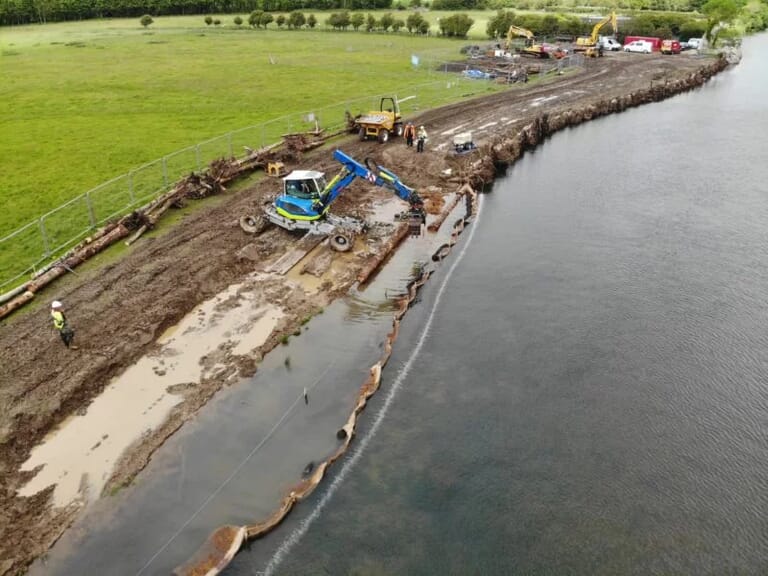
- poorly managed temporary works near rivers
This means that even a seemingly minor pollution event can now trigger substantial penalties.

Silt pollution: a growing enforcement focus
Many pollution incidents reported by regulators stem from everyday construction activities such as:
- Pumping out excavations or trench water without filtration
- Heavy rainfall washing stockpiles into nearby drains
- Settlement tanks that are too small, incorrectly set up, or overloaded
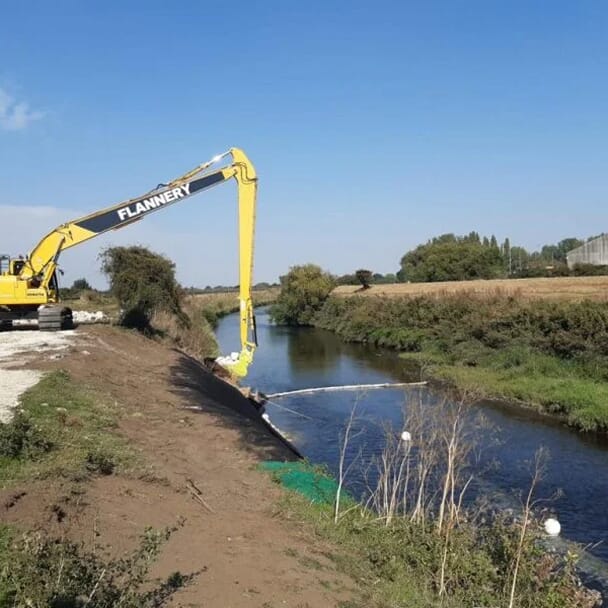
- In-channel works disturbing bed sediment
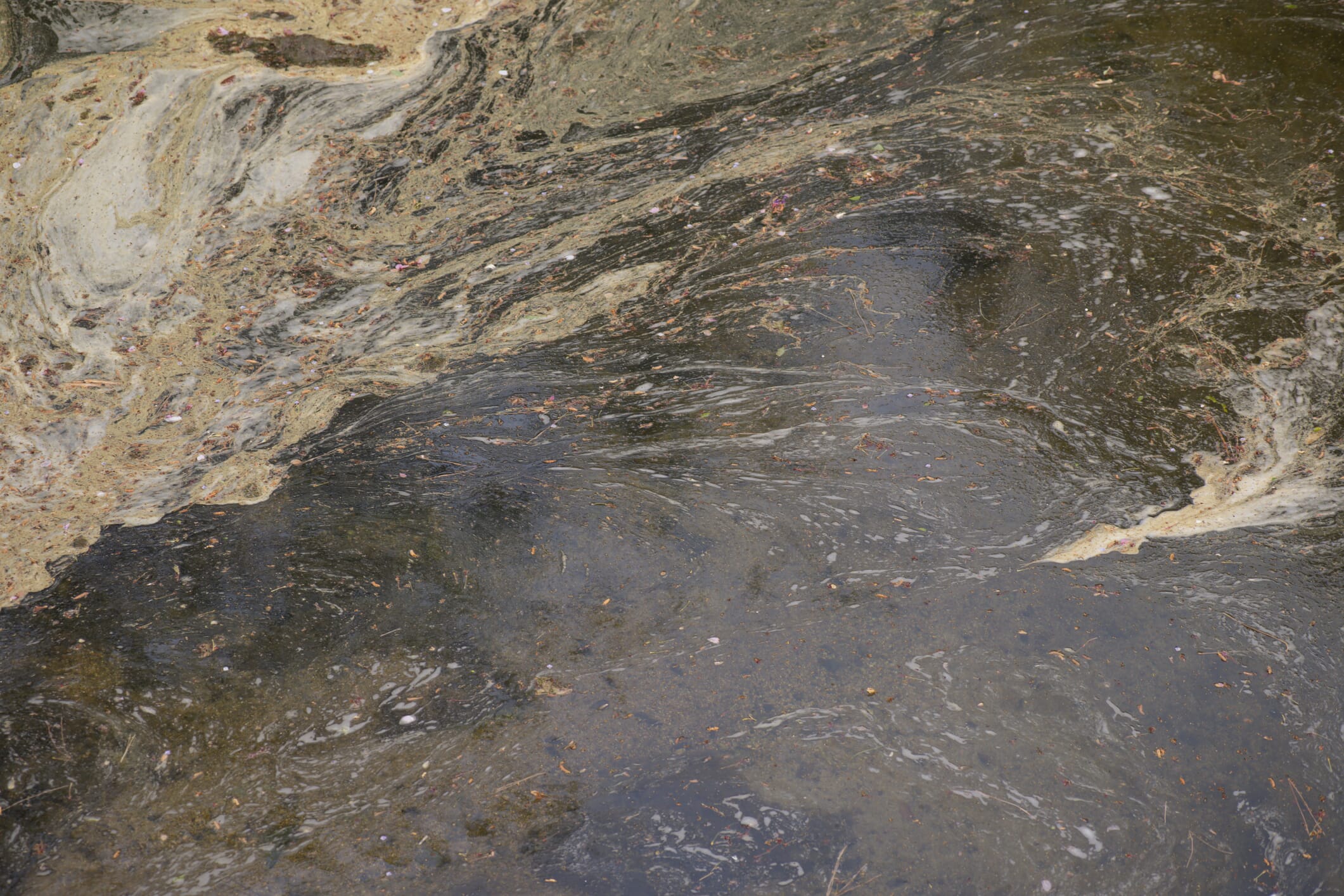
Even small discharges of silt can have a big environmental impact, reducing oxygen levels in watercourses, smothering fish spawning grounds and damaging aquatic vegetation, all of which disrupts biodiversity.
Because of this, regulators treat silt pollution seriously. They now expect clear evidence of planning, control measures and proper permitting. If silty water enters a river, drain or ditch without proper control or a valid permit, enforcement action is likely.
For construction sites, the message is clear: pollution prevention must be built into the project from day one, not treated as a reactive task.
The real cost of pollution for contractors
In addition to direct pollution fines, construction teams may face:
- Project delays during investigations
- Expensive remediation works
- Loss of future tender opportunities
- Negative press and community concerns
- Long-term reputational impacts
- Increased scrutiny on future projects
Almost all silt-related incidents are avoidable with the right planning and water treatment setup. That’s why it’s so important to manage construction site run-off properly and build in appropriate measures, right from the start of a project.
How construction sites can avoid fines (practical steps)
1. Plan water and silt management early
Early engagement enables better design and helps identify low-carbon, passive solutions. This means adopting what we call a ‘Rain Ready ®’ approach – by taking proactive action and building in silt control measures at the initial stages of a project, construction companies can reduce pollution, fine risks and costs. Read more about ‘Why it pays to be Rain Ready’ in our recent article.
2. Know if you need a water discharge permit
If water is discharged into a river, ditch, drain or soakaway, a permit may be needed. We cover these requirements in more detail in our blog, Environmental Permitting: A Guide to Discharging Water From Site. We also provide tailored support and training to help contractors understand permitting requirements and prepare applications correctly.
To find out more about your permitting requirements, join our free lunchtime webinar on 22 January 2026: Environmental Permitting: a Guide to Discharging Water from Sites in England & Wales
Reserve your place → [Join the Environmental Permitting webinar]
3. Use the right silt-control system
Effective silt control treatment depends on the specifics of the site. Options include:
- Settlement tanks
- Passive filtration systems
- Gel-based flocculants
- Silt bubble curtains for in-water works
- Gravity-assisted separation
- Closed-loop treatment where discharge is not permitted
At Frog Environmental, we will assess your site at the earliest opportunity – preferably before work has begun – so we can recommend the right silt control solutions to ensure that you remain compliant from day one of your project.
4. Monitor, record and adapt
Checking turbidity, recording flow rates, and adjusting systems help ensure compliance throughout the project. At Frog Environmental, we can support and guide your teams through the process with a free 30-minute consultation and bespoke training sessions.
Contact us → [Book a free pollution prevention consultation]
5. Train the site team
Many pollution incidents occur when site teams improvise under pressure. Training reduces risk and strengthens compliance. We run bespoke training and CPD sessions, specifically to help the construction industry understand how to manage silt pollution. Book your team onto a bespoke Silt Control and Surface Water Management training session or join us for our free 1-hour Silt Pollution Prevention: Lunch & Learn CPD.
What regulators expect from construction sites
UK rivers are under intense scrutiny. Every pollution story – whether related to agriculture, construction or utilities – increases public pressure on regulators to act quickly and decisively. Contractors who manage water correctly gain trust from clients, regulators and communities.
Construction sites must demonstrate:
- Clear planning
- Effective silt treatment
- Accurate monitoring
- Proper permitting
How can Frog Environmental help?
We support contractors across the UK with early intervention silt-control solutions, permitting guidance and training on how to manage water quality on site.
If you need project-specific support or want to discuss a temporary water discharge permit, our team can help.
Get in touch →[Talk to our experts]
Watch our webinar recording → [Environmental Permitting: a Guide to Discharging Water From UK Sites]
Frequently Asked Questions
1. How can construction sites prevent silt pollution in a cost-effective way?
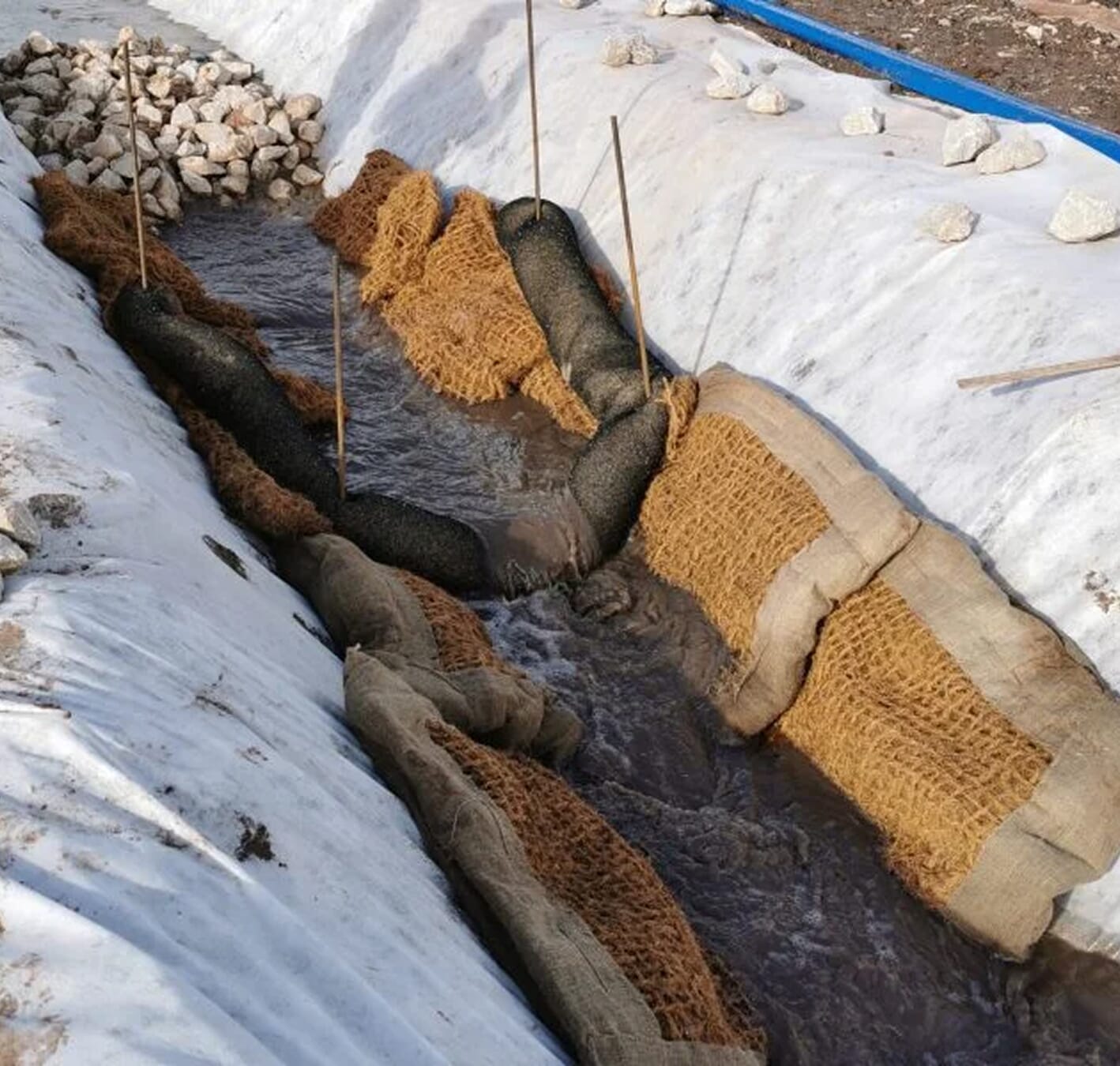
Silt pollution is one of the most common causes of enforcement action – but also one of the easiest to prevent cost-effectively. The most efficient approach is to tackle the issue before water accumulates by using good site design, material management and passive silt-control systems. Gravity-fed treatment, low-maintenance silt control products, such as Silt Mats and Silt Nets and Flocculants can significantly reduce costs compared to reactive, last-minute solutions. Choosing the right system for the size and flow of your site prevents pollution at source and avoids unnecessary hire or labour costs.
2. When do I need a temporary water discharge permit?
You may need a water discharge permit if you are releasing water – even clean-looking water – into a river, stream, drain, ditch or soakaway. This applies to surface water, pumped groundwater, trench water and rainwater runoff. The key question is not how clean it looks, but where the water is going. Obtaining the correct permit before discharge protects your project from pollution fines, delays and unexpected enforcement. If you’re unsure, we can review the discharge route and advise on whether permitting is required.
3. What is the simplest way to avoid pollution fines on construction or development sites?
The most reliable way to avoid pollution fines is through early planning and effective silt treatment. Most incidents investigated by regulators occur when water management is left until the last minute or when improvised solutions are used under pressure. By planning your silt pollution controls early, selecting an appropriate treatment system, and monitoring turbidity before discharge, you can stay compliant and avoid enforcement action. Training the site team and documenting checks also demonstrates competence during inspections.
4. Are there low-carbon or low-maintenance options for managing water discharge on site?
Yes. Many contractors are now choosing passive silt treatment systems that rely on gravity rather than pumps. These systems reduce carbon footprint, energy use and operational costs – while delivering reliable turbidity reduction. Gel-based flocculants can also speed up settlement without introducing hazardous chemicals. Selecting a low-maintenance system not only helps prevent silt pollution, but also reduces manpower requirements and cost over the life of the project. Frog Environmental can recommend the most efficient option based on site footprint, flow rates and regulatory needs – get in touch with our expert team for a free 30-minute consultation.
Disclaimer: This article is correct at the time of writing and while we endeavour to update annually, legislation may change over time. We pride ourselves on providing site-specific advice. Please contact us about your situation; we’d be delighted to help.
Cost-effective ways to manage silt control

“The results (of the bubble curtain) were quite dramatic – in fact, startling… we have a workable solution that we’ve proved has a dramatic impact on noise propagation.”
David McLaren, Site Manager – Marine & Civils
John F Hunt Regeneration

Knowledge Hub
Sharing good practice
-
![Sustainable-bubble-curtains-Large]()
In the news: Sustainable Bubble Curtains
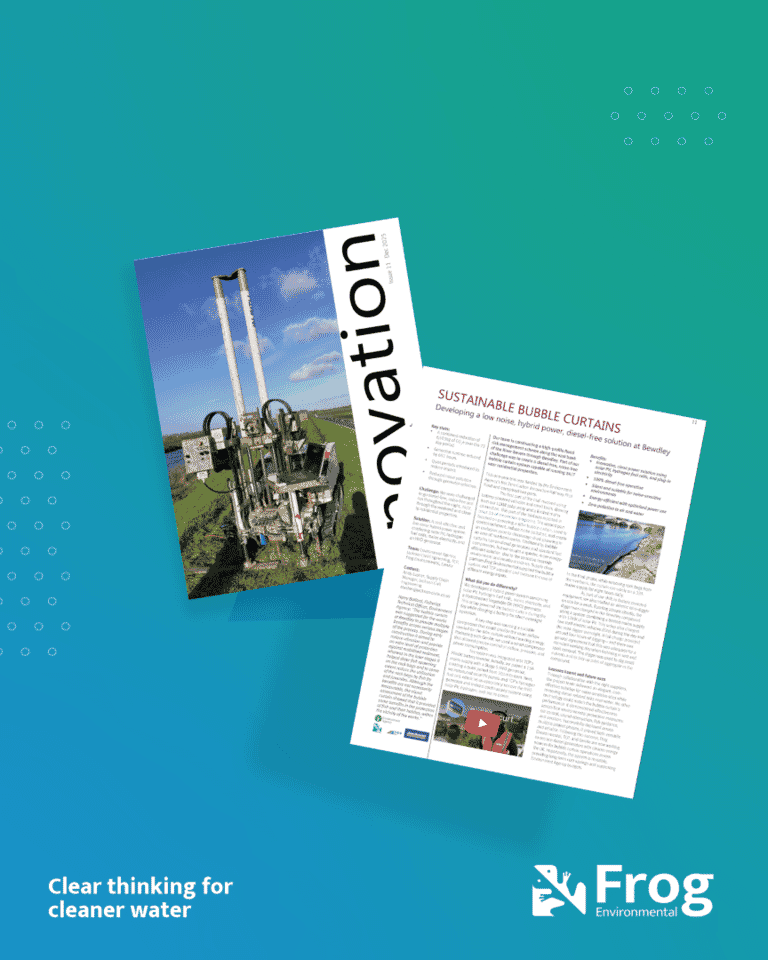
Leading national magazine, Innovation has covered a feature delving into sustainable options when operating our bubble curtains, as demonstrated in our client’s project.
Read Article -
![two bubble curtains]()
Bubble Curtains: A powerful solution, but don’t DIY
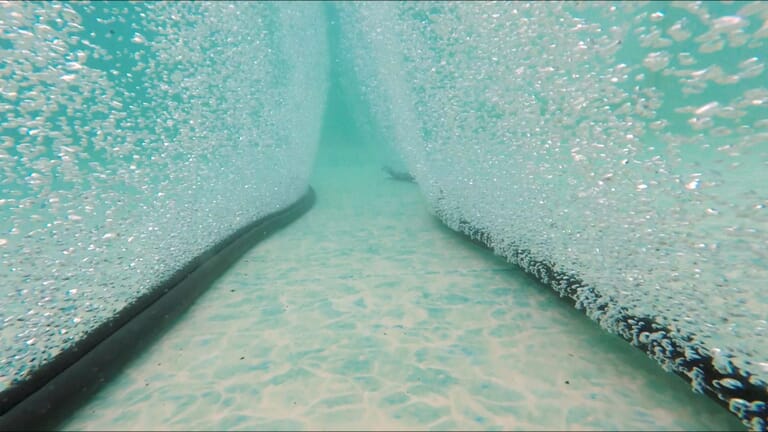
When correctly engineered and tailored to local site conditions, Bubble Curtains provide a highly effective solution for trapping sediment, reducing noise, aerating water, and preventing pollution from spreading downstream – a level of performance and reliability that DIY systems can’t match.
Read Article -
![Bubbles-breaking-surface-tension-to-form-a-barrier-800x600.jpg]()
Research – evaluating oxygen transfer
This research shows results of the aeration systems we sell being uniformly excellent and producing some of the highest SOTE values observed.
Read Article -
![Silt-bubble-barrier-and-SiltMats-protecting-river-SSSI-Yearl-Weir.png]()
Micro bubble curtains study: impact on sediment dispersal
This study outlines findings of using Bubble Curtains for effective sediment control.
Read Article -
![training-example-3]()
Influencing river morphodynamics with bubble screens
The reported laboratory experiments demonstrate the potential of the bubble-screen technique to modify the morphology in a variety of applications in shallow rivers and open channels.
Read Article -
![Silt-bubble-barrier-and-SiltMats-protecting-river-SSSI-Yearl-Weir.png]()
Influencing bend morphodynamics with an air bubble screen
These preliminary experiments show the potential of a bubble screen to influence and modify the bed morphology.
Read Article -
![Silt-control-using-SiltMats-and-Bubble-barrier-Yearl-Weir-800x600.jpg-1]()
Reduction of bend scour with an air-bubble screen
These preliminary experiments show the potential of a bubble screen to influence and modify the bed morphology.
Read Article -
![Bubble-curtains-reduce-the-movement-of-silt-downstream-800x600.jpg]()
Influencing flow patterns and bed morphology with an air bubble screen
The ability of a bubble screen to redistribute the flow field and bed morphology in shallow rivers and open channels has been investigated in laboratory experiments.
Read Article -
![Curtain-Blasting-Marinette-Credit-BubbleTubingR]()
Mitigating underwater explosion effects with bubble curtains
Mitigation of shocks and noises is made possible by the use of a bubble curtain set around the explosive charge.
Read Article