Environmental permitting: A guide to discharging water from site
In England discharges to a surface watercourse requires permission under the Environmental Permitting Regulations.
This article provides the construction industry with background on the permitting structure and assistance on the key aspects needed to complete a bespoke permit application for discharging water off-site.
When is a consent to discharge water required?
Permission is required from the Environment Agency (EA) for the temporary discharge of surface water into any watercourse – for example, discharging rainfall-induced overland run-off from a construction site.
The permanent design agreements for headwalls, drainage assets, and a defined final flow rate from the site, acquired via the Lead Flood Authority (LFA) or Local Authority (LA) apply to the operational phase of the development, leading to the routine discharge of clean uncontaminated water and do not constitute permission to discharge to a watercourse during the temporary works phase.
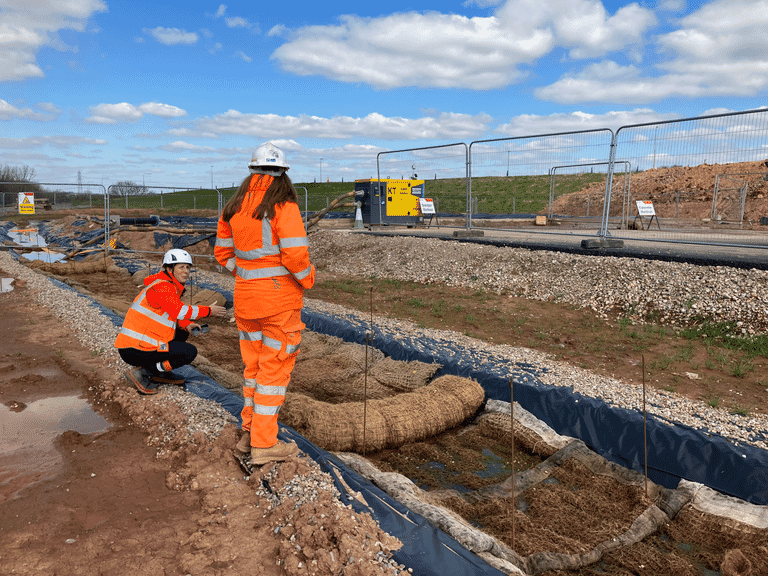
Permission from the LA, LFA or planning body does not relate to the temporary works position where bare ground and exposed soils require active management in order to prevent pollution, often for a period lasting several years.
Planning Approval may bring a conditional requirement to manage silt and sediment run-off, but in practice this is enforced by the Environment Agency, rather than the Local Authority.
Where a discharge is made to a Local Authority (“Ordinary”) watercourse, experience shows that permission is still required by way of an Environmental Permit, obtained from the EA as the regulatory body for “Main Rivers”. This is due to the fact that minor watercourses inevitably flow to the main rivers that the EA are responsible for.
Is my planned water discharge activity exempt from requiring a permit?
Guidance provided in the Regulatory Position Statement (RPS) for temporary dewatering from excavations to surface water states that only uncontaminated water consisting of clean rainwater or infiltrated groundwater may be released from a site for up to three consecutive months under exemption.
In summary, the discharge must:
- consist of clean water only (no silt, oils or contaminants)
- not operate for longer than 3 months
- not be formed from any roadway drainage, storage area or work areas
- not contain any flocculant or coagulant (eg. secondary treatment).
Discharging water often requires a bespoke permit
You must apply for a bespoke permit for water discharge if your activity does not meet the conditions for the RPS or a Standard Rules Permit, the latter is only applicable to small sewage systems.
Therefore, a bespoke permit is required to discharge water from a construction site, even if the discharge does not directly enter a main river.
How to apply for a discharge permit and what is needed?
To gain consent to discharge water, applications can be made to the Environment Agency for a discharge permit. Note that there is a fee for making an application which should be paid before submitting your forms.
The EA can take four to ten months to approve a request for a permit so we recommend you submit your application early to avoid any delays in your works schedule.
Within the application for an Environment Agency discharge permit, they will seek information on:
-
- the proposed discharge
- an assessment of the risk
- how water quality will be controlled and monitored via a management system.
Most commonly, this is achieved by presenting a Water Management Plan containing:
An overview of temporary works
Details covering site setting, receiving water and nature of discharge (including a non-technical summary). If contaminants are known or anticipated you must carry out a Specific Substance Assessment.
A risk assessment
Use the Source-Pathway-Receptor model and follow the EA’s guidance on risk assessments for your environmental permit.
Controls & treatment
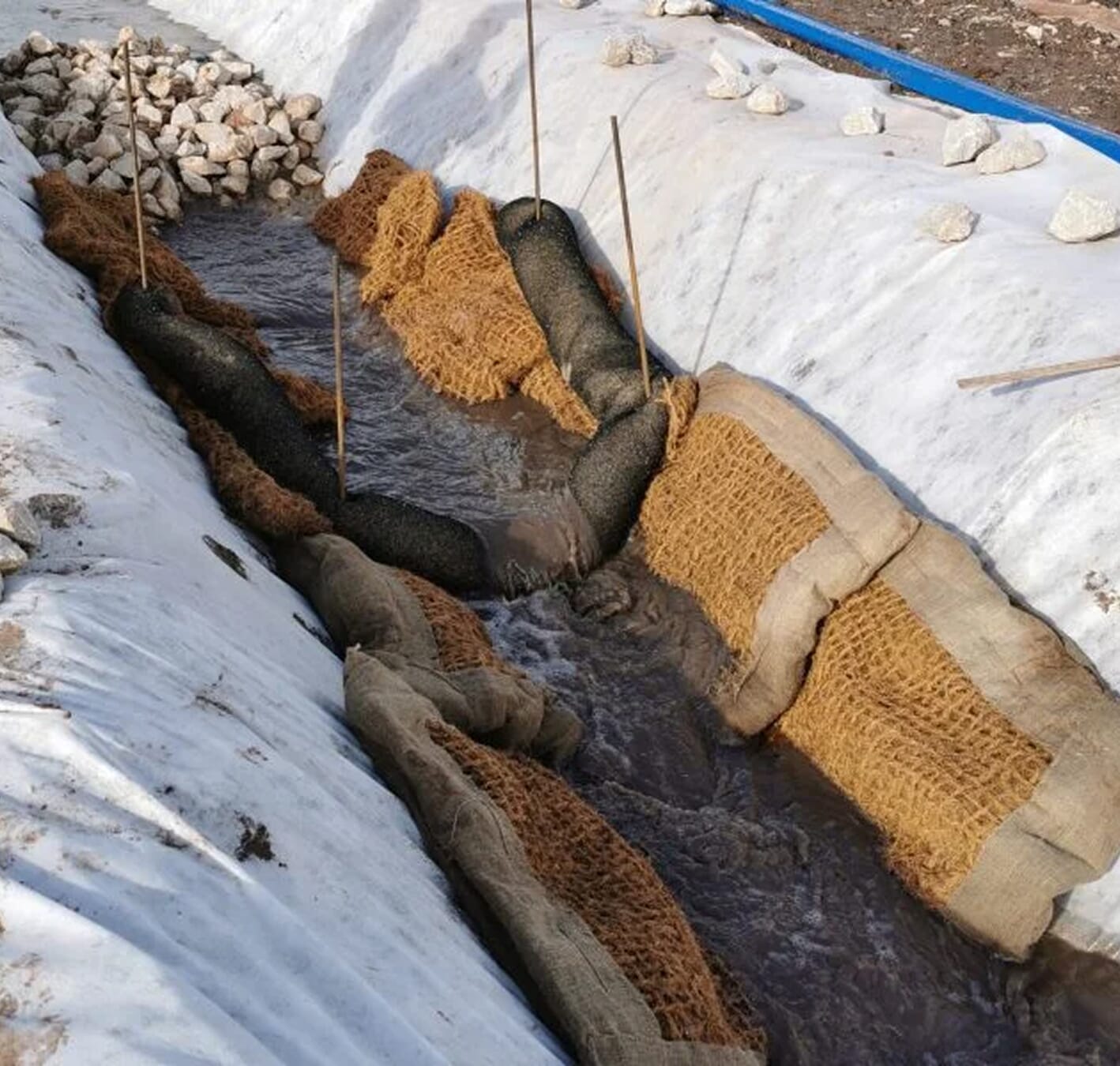
Outline treatment processes that will be followed. They will require information on the type of treatment used including comparison against Environmental Quality Standards (EQS) where a flocculant or coagulant is used.
Monitoring and control
Detail how interventions will be checked and monitored, with a clear process for remedial actions.
Once a permit is issued, it will come with conditions relating to water quality. It is the duty of the permit holder to ensure that all conditions noted on a bespoke permit are adhered to.
Fees
The permitting fee is payable in advance under the EA Fees and Charges Scheme. Fee changes were made in June 2024.
Bespoke permits have an annual subsistence fee. A permit will remain in place until the EA are notified by the applicant that the permitted activity has finished, at which point the permit can be surrendered.
Charges are weighted towards volume, so care should be taken to ensure that the application accurately reflects the activity on site, particularly if water may be pumped during standard work hours only.
Process & timescales
The EA’s response period is 4 months, however, in our experience turnaround times can be much longer so make sure you leave plenty of time to submit your bespoke permit to avoid delays in your works.
Upon submission the EA will undertake a screening assessment to ensure that all mandatory information has been received, including pre-payment. Once they are satisfied they have all of the information they require to assess the permit, the application will be classed as ‘duly made’ and passed to a Permitting Officer for action.
If the EA are missing information they will notify the applicant directly. The submission cannot be classed as ‘duly made’ until any missing information is received. This will result in further delays to the permit being assessed.
What conditions might be included on my permit?
The information, criteria and conditions displayed on a permit are site specific and determined by the nature of the discharge activity and sensitivity of the receiving environment.
The EA will consult externally with a number of stakeholders and internally with their own technical specialists to ensure that an appropriate level of environmental protection is in place.
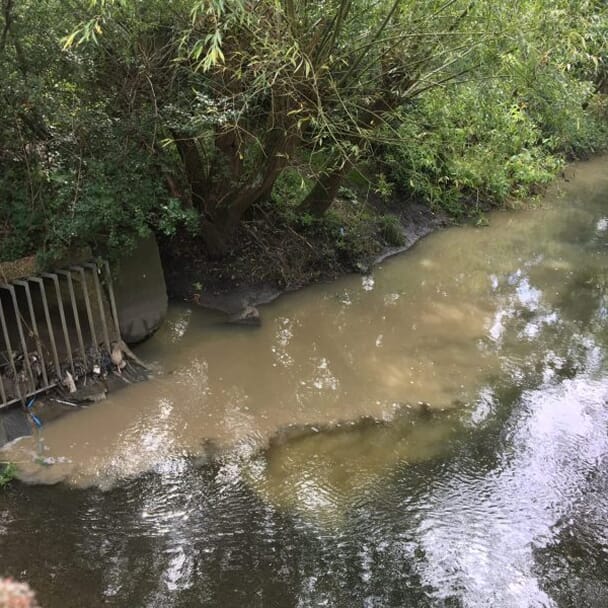
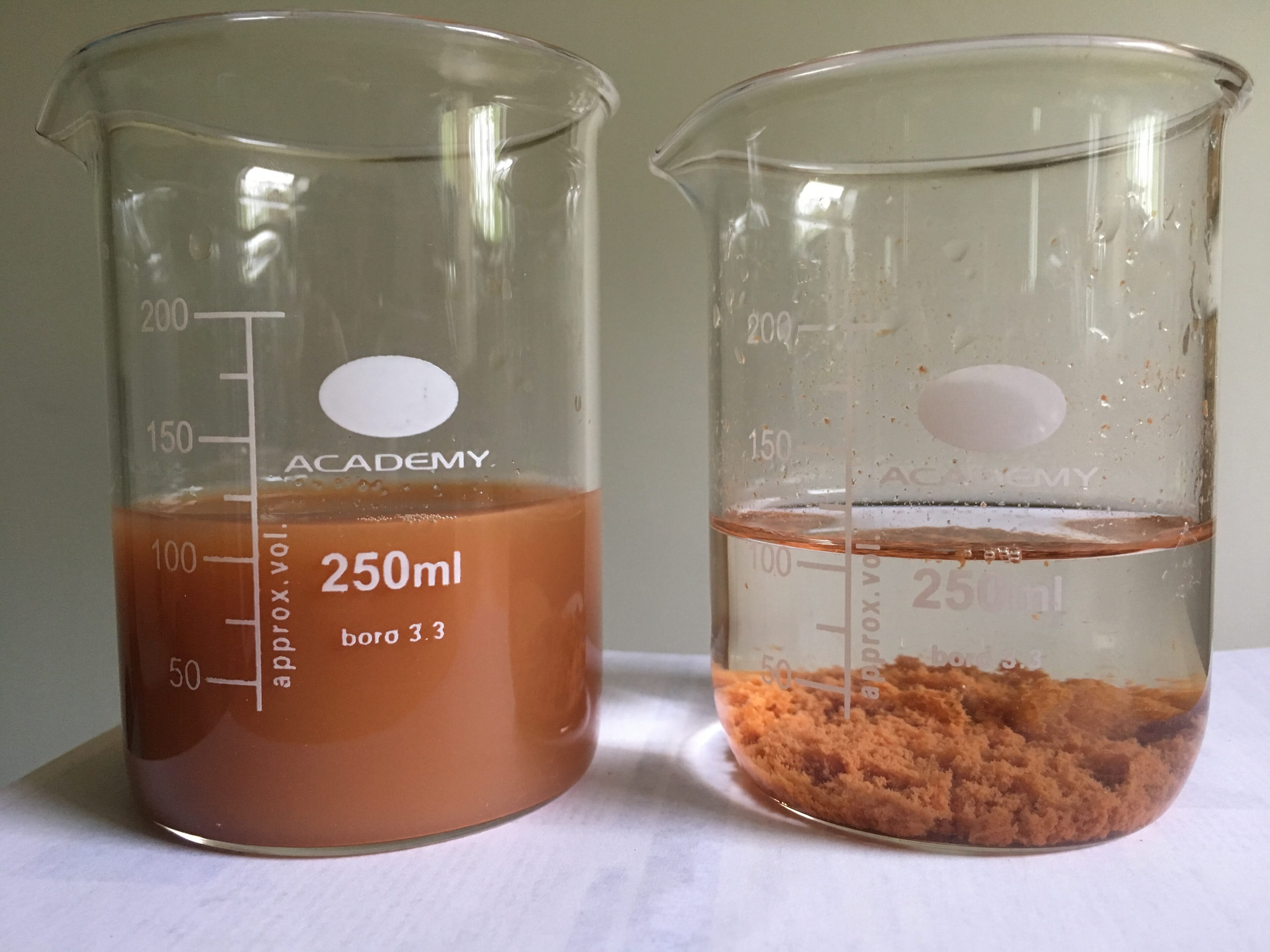
For suspended solids (typically composed of silt/soil/ sediment), the key compliance value is Total Suspended Solids (TSS). Compliance values are usually set between 25 mg/l and 100 mg/l. Once this value has been set on a bespoke permit, it is the duty of the permit holder to ensure that the threshold is not breached. This will be achieved by having a monitoring plan in place.
For a further explanation on monitoring suspended solids and the difference between turbidity monitoring and Total Suspended Solids monitoring, contact us and we will send you our guidance note on monitoring suspended solids and turbidity.
Watch our free webinar on how to complete an environmental permit
Watch our free hour long webinar and Q&A session with our Technical Director which provides the construction industry in England and Wales with background on the permitting structure and assistance on the key aspects needed to complete a bespoke permit application for discharging water off-site.
Watch our consent to discharge and environmental permitting webinar.
Frog Environmental are trusted water quality and silt control specialists working with contractors, regulators, and consultants within construction, utilities, marine, coastal, and public sector industries across the UK.
We have decades of experience in advising clients on surface water and silt management, and industry-leading products to help avoid risks of polluting. We also run training and CPD courses (some are free to attend).
For products, services, training and technical sales support contact our technical team or call 0345 057 4040, or follow our news and updates.
Related
Silt control products

“Thanks to Frog’s technical expertise and insight, we have found new ways to tackle these common issues and improve our site water management practices – from company-wide awareness and training to monitoring and prevention. As a consequence, we have made significant cost savings and lowered our carbon emissions.”
Paul Thomas, Head of Environment
Winvic Construction

“The results (of the bubble curtain) were quite dramatic – in fact, startling… we have a workable solution that we’ve proved has a dramatic impact on noise propagation.”
David McLaren, Site Manager – Marine & Civils
John F Hunt Regeneration

It’s good to see Frog getting involved with GT at the earliest stages of the project to help with planning out water management in advance of needing it.
Galliford Try

I really enjoyed learning how to identify which measures are best suited to the site conditions.
TACP (UK) Ltd

“Frog Environmental were knowledgeable, helping to establish a workable, cost-effective and low maintenance solution for site approved by the regulator. They really understood the water management issues we had on site and worked with us to develop a solution which works, as well as engaging with our operatives to ensure that they could effectively manage the system.
We are delighted to have found a solution that prevents pollution and protects the environment, and ultimately allows us to continue with construction.”
Glenn Entwistle, Senior Environmental Advisor
Advance JV

The surface water system drainage feature utilised innovative solutions from Frog Environmental.
A rain-ready strategy was implemented, which enabled the development of a robust management system capable of effectively managing fluctuations in weather conditions year-round.
This provided a timely, sustainable and cost saving solution for our client.
Anthony Jordan
RSK Geosciences

“The positive impact of your business on the wider industry is incredible. You have upskilled so many of us and definitely improved water quality across UK construction sites!”
Bernadette Anderson, Environmental Manager
VolkerLaser

Frog’s commitment to develop innovative, market-leading strategies to help their construction clients take responsibility for their sites has and is inspiring an industry-wide change in management culture to improve environmental practices. Of note is their “Rain Ready” water treatment system which is setting new benchmarks in environmental excellence.
Brad Griko, VP Operations
Clearflow Group

“The systems were very effective, and we can see how they could be used on other projects. Being able to talk through the scenario with Frog Environmental was really helpful… We were so pleased to be able to proceed with this essential works with no disruption to either wildlife or our workplan, it saved us time, money, and provided peace of mind that we had taken effective steps to protect the environment.”
Huw Williams, Site Agent
Morgan Sindall Infrastructure – Water & Highways

They (Frog Environmental) were efficient in providing advice and the most appropriate product for our project. The team responded promptly to ensure the Bubble Curtain was delivered to the site on schedule.
It has worked well and has been great on site. We are demobilising this week, and the bubble curtain is already in store at our next site for reuse!
Hayley Jackson, Site Agent
Coffey Group

The Kex Gill road realignment scheme is a challenging project with multiple environmental risks including management of silt and water quality of the surrounding environment given the locality of designated sites.
Frog Environmental are providing us with extensive technical support, including the design, supply and install of their silt control products on site to ensure the project minimises risks to the watercourses in the project vicinity and prevents impact on highly sensitive aquatic species.
It’s great to be working with them and we’re delighted with the success of the whole project.
Georgina King, Associate Director
RSK Environment

Knowledge Hub
Sharing good practice
-
![iStock-496472143]()
Construction runoff: Why misunderstanding sewers can lead to pollution
We explore the different types of sewers, when and how they are used, and the key considerations for managing site discharges, including when a discharge permit is required and how this links to wider environmental compliance.
Read Article -
![Trout in water with bubbles]() 14th May 202612:00 pm – 1:00 pm
14th May 202612:00 pm – 1:00 pmFree CPD webinar: Environmental risks and remedies when working in and near water
Minimising pollution risk and ensuring site teams are properly trained are critical components of effective site water management planning. Join our technical team for this free webinar.
View Event -
![Discharging water from site will often require a permit under environmental regulations]()
Discharge consent & environmental permitting webinar; a guide to discharging water from construction sites in England & Wales
Learn why environmental permits and consents for water discharge are needed and how to apply for one. Watch our free webinar for top tips on staying compliant including a detailed Q&A session.
View Video -
![iStock-1297288850]()
The cost of pollution: How construction sites can avoid heavy fines and bad press
Learn how construction sites can avoid pollution fines and bad press with practical guidance on silt control measures that are cost-effective and have a long-term benefit.
Read Article -
![Winter on a construction site showing silt and water management]()
Preparing a site for winter shutdown; managing water quality and pollution risks
Even when construction activity stops, your legal and environmental responsibilities don’t. Watch our free webinar for top tips on staying compliant and avoiding incidents.
View Video -
![Discharging-water-Large]() 22nd January 202612:00 pm – 1:00 pm
22nd January 202612:00 pm – 1:00 pmFree CPD webinar: Environmental permitting; a guide to discharging water from site in England and Wales
Join our free webinar which will provide the construction industry in England and Wales with background on the permitting structure and assistance on the key aspects needed to complete a bespoke permit application for discharging water off-site.
View Event -
![Construction site winter shutdown]()
How to prepare your site for winter shutdown: Managing water quality and pollution risks
Is your construction site prepared for its annual winter shutdown? Read top tips on staying compliant and avoiding incidents.
Read Article -
![Discharging water from site will often require a permit under environmental regulations]()
Environmental permitting: A guide to discharging water from site
This article provides the construction industry with background on the permitting structure and assistance on the key aspects needed to complete a bespoke permit application for discharging water off-site.
Read Article -
![Site-photo-no-branding.png?w=768&h=576&scale]()
Why it pays to be Rain Ready
Discover how being Rain Ready® can help construction companies manage water quality more effectively
Read Article